Books
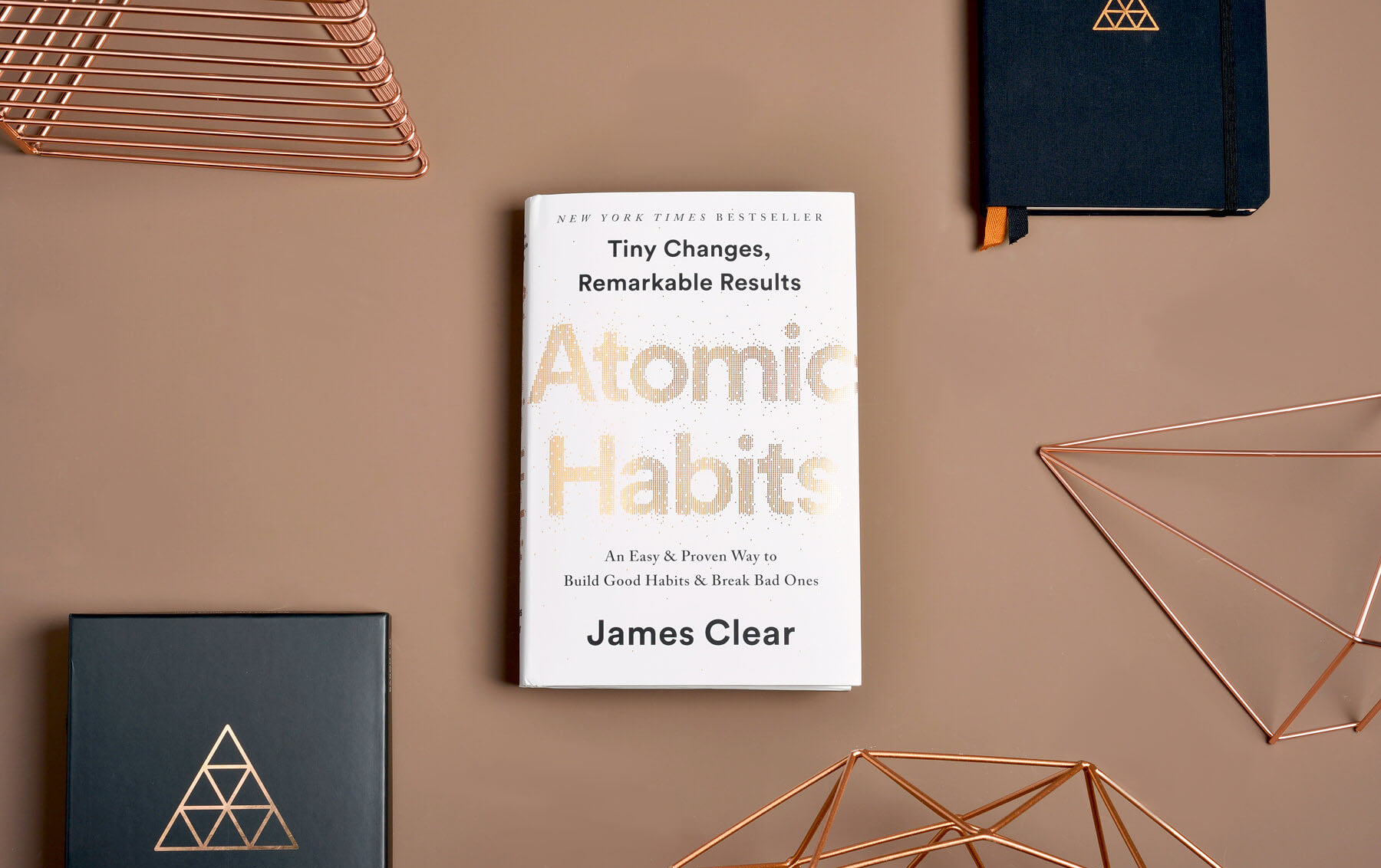
Atomic Habits
What stayed with me from James Clear's book - systems, identity, environment, and never missing twice.
I liked Atomic Habits because it did not feel like it was asking me to become a completely different person overnight.
A lot of self-improvement advice sounds good for about ten minutes, then falls apart when you actually have lectures, deadlines, bad sleep, or just a normal messy week. This book felt more useful because James Clear keeps bringing the idea back to systems. Not motivation, rather practical advice that worked for me.
Systems over goals
The first idea I really liked was building systems instead of only chasing goals.
At first, that sounds like one of those phrases that gets repeated so much it stops meaning anything. Obviously goals matter. If you are studying for exams, trying to get fitter, or learning something difficult, you probably do have an outcome in mind. It is just unrealistic to not think of the desired outcome somewhat.
But Clear’s point is that the goal is not where most of the work happens. The work is in the system you return to every day.
The example I was trying to remember was British Cycling and Dave Brailsford. Clear writes about Brailsford’s idea of the “aggregation of marginal gains”: improving lots of small things by a tiny amount. They looked at obvious things like training and bike seats, but also smaller details like massage gels, hand washing, and the pillow and mattress that helped each rider sleep better.
That example made the idea click for me. Winning was still the goal, but the system was what made winning more likely. Better sleep, better recovery, better training, better equipment, better habits around the sport. None of those things sound impressive on their own, but together they compound.
I find that more realistic than just saying “be disciplined”. Especially as a student, the system is usually what decides whether something happens. If work is broken down into approachable steps, I am more likely to do it.
Identity-based habits
The identity part was probably the idea that stuck with me the most.
Clear gives the example of two people being offered a cigarette. One says they are trying to quit. The other says they are not a smoker. It is a small difference, but it changes the way the habit is framed. The first person is still someone who smokes but is resisting it. The second person is acting from a different identity.
I liked that because habits feel deeper than just actions. A habit is not only “I did this thing today”. Over time, it becomes evidence for the kind of person you think you are.
That can work against you. If you keep telling yourself you are lazy, bad at studying, bad with money, bad at waking up, or bad at finishing things, then every slip becomes proof for that story. But it can also work the other way. Every small action is a vote for a different identity.
I do not think this means pretending to be someone you are not. It is more practical than that. If I want to become someone who reads more, I do not need to announce that I am now “a reader” and make it my whole personality. I can just read a few pages and let that be one small piece of evidence.
Environment beats willpower
Another part that resonated with me was the idea that willpower is not enough.
This is probably obvious, but I still needed to hear it. If a bad habit is easy, visible, and always available, then eventually I am going to do it no matter how much I tell myself that I could ‘power’ through it.
That is why the environment matters so much. If the trigger is always there, then I am asking myself to win the same argument again and again. It is better to remove the argument where possible and not allow yourself to experience that conflict in the first place.
This applies to small things. If my phone is next to me while I am trying to read, I will probably check it. If the book is already on my desk and my phone is across the room, reading becomes easier. That does not make me a better person. It just makes the better action less annoying to start.
I liked this because it makes habit change feel less moral. It is not always about being weak or strong. Sometimes your environment is designed to fail you.
Never miss twice
Missing once is normal, and should be expected. I always felt really bad when I would be doing a good habit, keeping up a streak and then missing one day. But allowing yourself to miss a day, means that you wouldn’t fall into the hole of thinking that you have ‘failed’. The recovery is more important than missing that day, the recovery process solders the habit further into your identity.
What I took from it
The main thing I took from Atomic Habits is that habits are less about one big decision and more about making the next good action easier. Incremental changes that compound.
Build a system. Make the environment help you. Do small things that prove the identity you want. If you miss once, come back quickly and continue as normal.